
Compare Franchise Opportunities Effectively
Franchising, Investment Decisions
How to Compare Two Franchise Opportunities Side by Side
When you are down to two strong franchise contenders, emotion can easily creep into what should be a clear business decision. A structured, side‑by‑side comparison helps you cut through the noise and see which concept truly fits your capital, goals, and risk tolerance.
1. Start with Initial Investment and Ongoing Fees
Begin by laying out the total capital required for each franchise. Do not stop at the headline franchise fee. Build a simple table that includes:
Franchise fee, build‑out costs, equipment, and initial inventory
Working capital needed until the business reaches break‑even
Ongoing royalties, marketing fund contributions, and any technology or software fees
Then compare those numbers to your available capital and financing options. A lower upfront cost is not automatically better if ongoing fees are higher and margins are thinner. Focus on total cost of ownership over the first three to five years, not just who looks cheaper on day one.
2. Evaluate Territory and Market Potential
Next, look at where you will actually operate. Two similar concepts can perform very differently depending on the territory structure and local demand. For each franchise, clarify:
How the territory is defined (by ZIP codes, radius, population, or trade area)
Whether you have exclusivity and what protections you have from encroachment
Demographic fit: income levels, traffic patterns, and local competition
A slightly more expensive franchise may win if it offers a larger, clearly‑defined territory or better demographic alignment with its ideal customer. Map both territories on paper and note where you see the best long‑term demand.
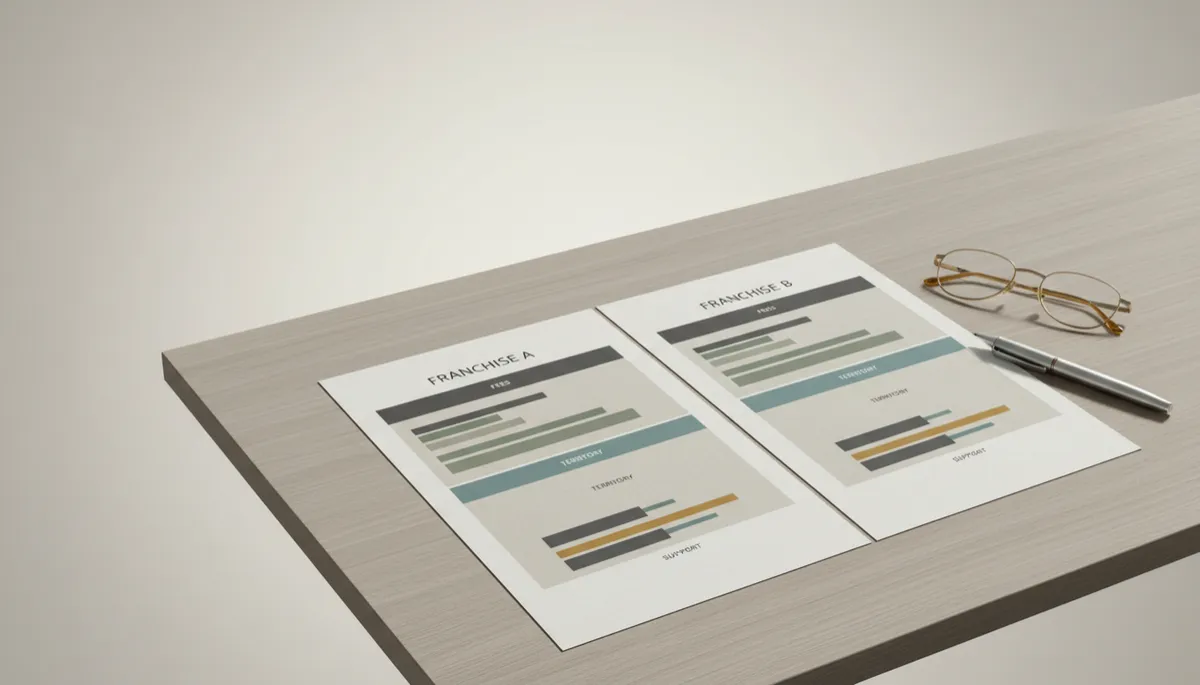
A simple side-by-side grid exposes cost, territory, and support differences quickly.
3. Compare Franchisor Support and Training
Strong support can be the difference between ramping up quickly and struggling alone. For each brand, document the specifics of:
Initial training length, format, and who can attend from your team
Field support visits, coaching calls, and marketing assistance after opening
Technology platforms, manuals, and ongoing education programs
Speak with existing franchisees from both systems and ask how responsive the franchisor really is when problems arise. Rank each brand on support quality, not just promises in the brochure.
4. Analyze Financial Performance Data from the FDD
Your Franchise Disclosure Document (FDD) is your best tool for an apples‑to‑apples financial review. Focus on Item 19 (financial performance representations), but do not ignore the rest of the document. For each concept, note:
Average and median revenue, plus ranges, if provided
Number of units included in the data and how long they have been open
Any profitability or expense details that help you model net income
Cross‑check this with Items 20 and 21, which show unit openings, closures, and franchisor financial health. Use conservative assumptions when building your own pro forma, and compare which franchise offers the healthier margin after all fees.
5. Assess Brand Growth Trajectory and Stability
Finally, weigh where each brand is headed. Rapid growth can signal strong demand, but it can also strain support systems. From the FDD and your discussions with the franchisor, look at:
Unit growth over the last three years and the percentage that are franchisee‑owned versus company‑owned
Closure and transfer rates, which can hint at franchisee satisfaction
Strategic plans for new markets, menu or service innovation, and brand positioning
Ask yourself which brand is building durable equity in the minds of customers and which feels more vulnerable to trends, competition, or economic swings.
Make the Decision with an Objective Partner
Once your side‑by‑side worksheet is complete, patterns usually emerge: one franchise fits your capital and territory better, offers stronger support, or shows more consistent financial performance and brand momentum. Still, it is easy to over‑weight small details or let personal bias tip the scales.
To keep the decision grounded, walk through your comparison with a qualified franchise consultant or advisor who is not emotionally invested in either brand. They can pressure‑test your assumptions, highlight risks you may have overlooked, and help you choose the franchise that best aligns with your long‑term investment strategy.
Before you sign any agreement, schedule a session with a franchise consultant and review your two opportunities side by side. An objective, data‑driven second opinion can turn a difficult choice into a confident, well‑supported investment decision.

