
Franchise vs. Startup: Fastest Path to Profitability
Business, Franchise, Entrepreneurship
Franchise vs. Startup: Which Path Actually Gets You to Profitability Faster?
If you’re serious about entrepreneurship, you’ve probably asked yourself: Should I buy a franchise or build a startup from scratch? Beyond lifestyle and creative control, one question looms largest for most aspiring owners—which option gets me to profitability faster?
How Franchises Typically Reach Profitability
A franchise is essentially a business-in-a-box. You’re buying into a proven model, brand recognition, and established playbooks. For many first-time entrepreneurship hopefuls, that structure can shorten the road to profitability—if you choose wisely and follow the system.
Proven demand: The concept has usually been tested in multiple locations, so you’re not guessing whether customers want it.
Playbook for operations: Marketing, pricing, hiring, and day-to-day processes are already documented and optimized.
Brand recognition: Customers may trust you on day one, which can drive revenue faster than a completely unknown startup.
The trade-off is cost and control. Franchise fees, royalties, and required marketing contributions eat into margins. Yet many franchise owners see consistent cash flow sooner than independent founders, because the early trial-and-error phase is largely removed from the equation.
How Startups Reach Profitability—And Why It Takes Longer
A startup offers complete creative freedom. You control the brand, the product, and the strategy. For many people drawn to entrepreneurship, that freedom is the whole point. But when it comes to profitability, freedom comes with a price: more experimentation, more risk, and often, more time before the business reliably pays you back.
Unproven model: You must validate your idea, refine your offer, and figure out who will actually pay for it.
DIY systems: You build your own processes for sales, marketing, and operations, usually through trial and error.
Brand from scratch: It takes time and consistent effort to earn trust and name recognition in your market.
The upside? Once a startup finds its footing, you keep far more strategic and financial control. There are no ongoing royalties, and you can pivot quickly as you learn. For entrepreneurs with a strong vision and appetite for risk, that long-term upside can outweigh the slower march toward profitability.
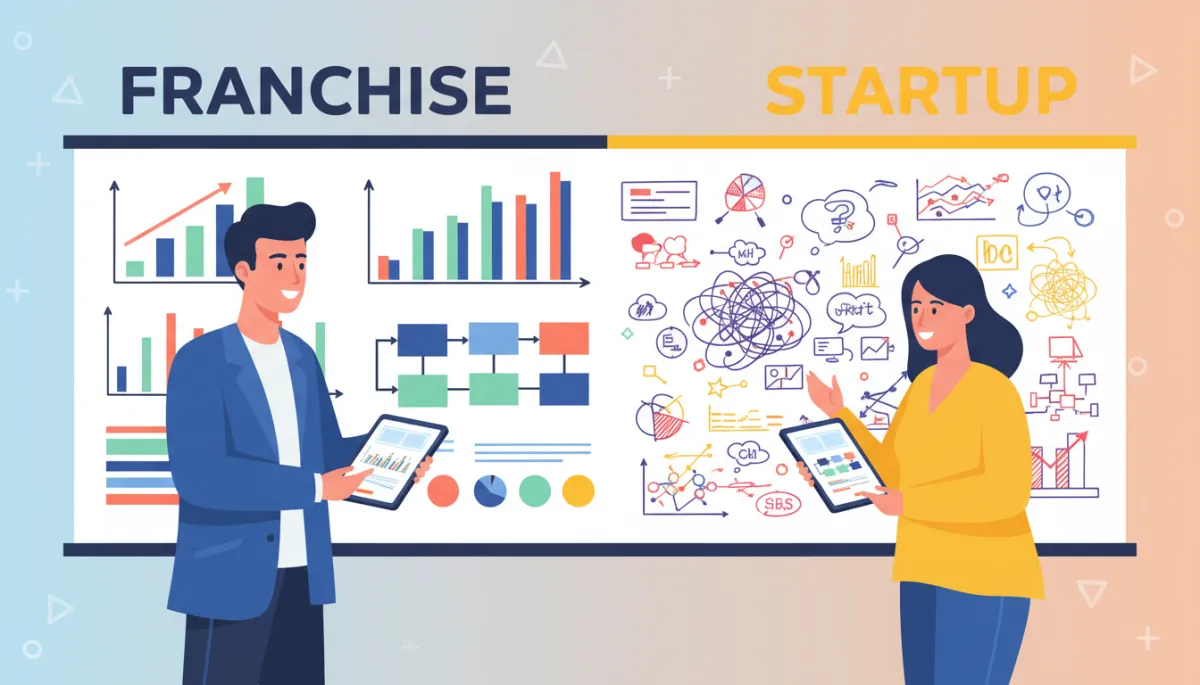
Structured franchise systems often shorten the learning curve to steady cash flow.
Direct Comparison: Which Path Is Faster to Profit?
Factor | Franchise | Startup |
|---|---|---|
Time to first revenue | Often faster due to brand and systems | Slower; requires testing and validation |
Upfront cost | Higher fees and build-out costs | Flexible; can start leaner |
Profit margins | Reduced by royalties and fees | Potentially higher once established |
📌 Key Takeaway: For many first-time owners, a franchise offers a shorter path to predictable profitability, while a startup offers greater long-term freedom and upside.
Which Option Fits Your Style of Entrepreneurship?
If your top priority is reaching profitability as quickly and predictably as possible, and you’re comfortable operating within a defined system, a franchise may be the better fit. It aligns well with entrepreneurs who value structure, support, and a clear playbook over creative control.
If you’re driven by innovation, want to build something uniquely yours, and can tolerate a longer, bumpier road to profit, a startup can be the more rewarding route. This path suits entrepreneurs who see entrepreneurship not just as a way to earn, but as a way to create, experiment, and potentially scale beyond what a typical franchise allows.
In the end, the “faster” path isn’t only about timelines—it’s about which route matches your risk tolerance, resources, and vision. Clarify what you want from entrepreneurship first, then choose the model that gets you to your version of profitability—financially and personally—as efficiently as possible.

